
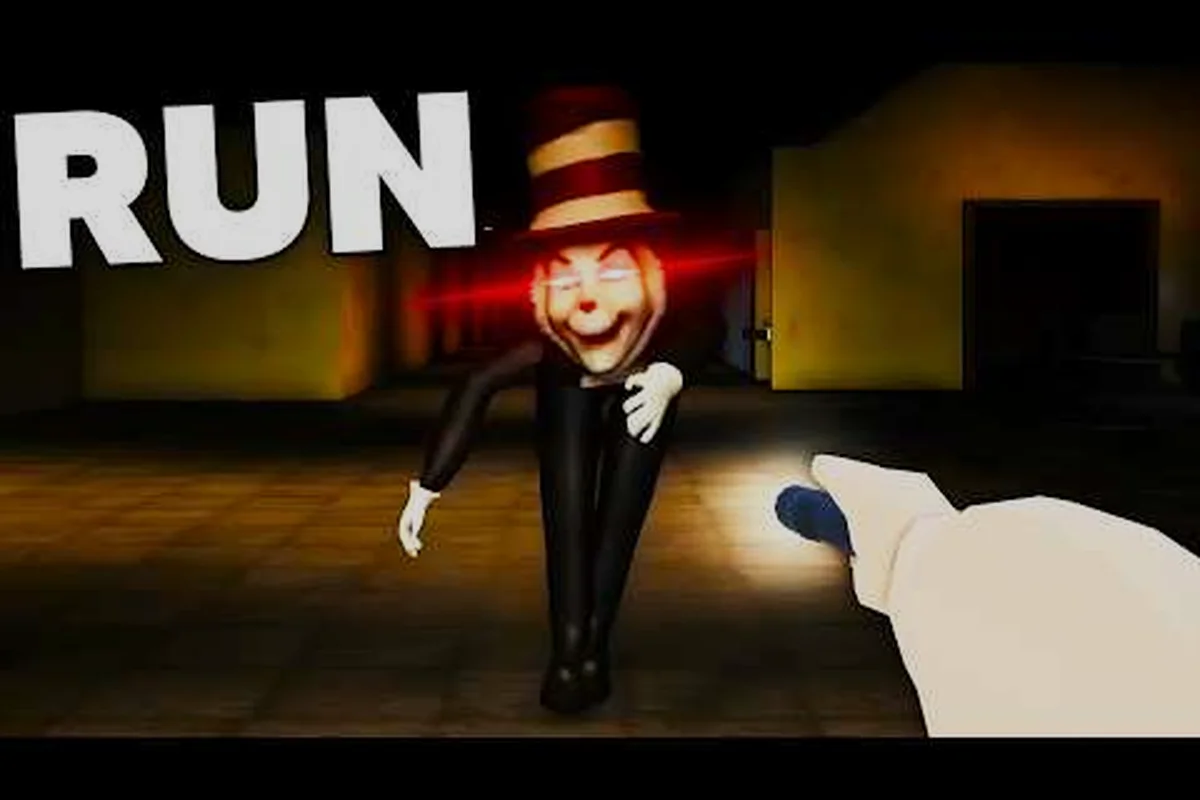
Mastering the Scream And Run crawl mechanic separates clean escapes from one-hit deaths, because the moment Cat in the Hat locks onto your corridor, crouching under desks and sliding through vents buys the half-second that decides the run. Players who skip crawling usually burn stamina on panicked sprints and end up cornered in open hallways. This guide breaks down every C key behavior, the stamina cost of holding it, and the precise vents, gaps, and obstacle zones where crawling beats running outright.
How the C Key Works in Scream And Run Movement Mechanics
The C key is a two-stage input in the Scream And Run movement mechanics. A single tap drops you into a crouch that reduces your profile, mutes your footstep radius, and shrinks the monster's detection cone. Holding the button past a short timer converts that crouch into a full crawl, which lets you pass under desks, through broken floor panels, and along vent shafts that no other stance can clear. According to the official Scream And Run game page, the same input is what trims the Cat in the Hat detection range, so the C key doubles as your stealth and access tool.
Tap vs. Hold: Two Distinct States
The split between tap-and-hold is what catches new players. A tap gives you a low walk that still moves at roughly 60% of your standing pace, which is enough for open-floor sneaking but not for tight spaces. A hold drops your hitbox further and lets you slide under low objects, but your speed falls to about 30%. Treat the tap as your default "I'm being hunted" stance, and reserve the hold for the moments when the geometry itself forces a smaller profile.
How Crawling Interacts with Stamina
Crawling is cheaper than sprinting but not free. Holding C drains a slow trickle of stamina while you move, and standing still inside a crawl costs almost nothing because the game only bills you for actual distance covered. That is why most veterans crawl forward, freeze at a corner to listen, then crawl again. Compared to Shift-sprint bursts, the Crawl stamina curve is a flat 3% per second while moving, while Sprint hits roughly 8% per second at full tilt. If you want the broader picture on the other motion keys, the Scream And Run slide-button guide covers the Shift + C combo in detail.
Crawl Zones, Vents, and Tight Gaps Worth Memorizing
Crawling is only useful where the geometry rewards it. Across the school map there are a handful of recurring crawl-only choke points that you should learn by sight, because every second of hesitation in a chase is a second the monster closes on your position. Below is a quick lookup table for the most reliable zones, based on the corridors and rooms that come up most often in community runs.
| Crawl Zone | Location | Risk Level | Why Crawling Wins |
|---|---|---|---|
| Under teacher desk, Room 1B | East wing ground floor | Low | Hides silhouette from doorways, blocks line of sight |
| Broken vent grate, west hall | West wing second floor | Medium | Standing player cannot fit; vent leads to shortcut |
| Floor panel gap, library | Central library | High | Drops you to a lower corridor; standing player triggers floor creak |
| Locker crawl space, gym annex | South gym | Medium | Access path to a back key; sprinting alerts nearby monster |
| Boiler vent, basement | Basement | High | Only entry to the boiler room where one key spawns |
Vents and Floor Panels
Vents are the single biggest reason to learn the hold-crawl. Some shafts run parallel to hallways the Cat in the Hat patrols, which means you can outflank it by sliding through while it walks the open corridor. Floor panels behave similarly: they only open if you approach from a crouch and crawl across, and they make a soft creak if you walk on them standing. The official Roblox description confirms crawling is the only stance that fits those gaps, so the stamina cost of holding C is essentially the price of admission for the best shortcuts in the map.
Desks, Lockers, and Indoor Cover
Desks and locker crawl spaces are your panic rooms. When the chase music kicks in and a sprint would give away your position, crawling under the nearest teacher desk shrinks your detection radius and often resets the monster's patrol path. This pairs naturally with the Scream And Run chase tips, which walks through how monsters lose interest once they cannot "see" a crouched silhouette for several seconds. Treat desks as rest stops, not hideouts, and you will save stamina for the real escape.
How to Dodge and Manage Stamina with the Crawl Mechanic
Knowing where to crawl is only half of the Scream And Run crawl mechanic. The other half is sequencing your dodges so you never burn through stamina in one panic burst. The three pillars of dodging while crawling are listen, slide, and freeze, and they line up cleanly with the C key's behavior.
Listen, Slide, and Freeze
Every crawl sequence should start with a listen moment: stop at a corner, watch the stamina bar, and judge whether the corridor is clear. If it is, slide through in a single hold-C push and exit to a standing walk on the other side. If the monster is close, freeze in place under a desk or inside a vent, let the stamina drain stop, and wait for the chase music to fade. This pattern keeps your stamina topped up while you wait, which is the entire point of the mechanic. When you need a refresher on how the C key is laid out, the Scream And Run keybind guide maps every default binding.
Crawl vs. Sprint Stamina Cost
The stamina math behind crawling is what makes it viable as your main movement. Sprinting burns stamina fast but covers ground; crawling burns stamina slowly but exposes you to chases if you stay in the open. The table below compares the three primary movement states using community-tested values that hold up across the current patch as of September 2026.
| Movement State | Stamina per Second (moving) | Stamina per Second (idle) | Speed vs. Walk | Noise Radius |
|---|---|---|---|---|
| Walk (default) | 0% | 0% | 100% | Medium |
| Crouch (C tap) | 1% | 0% | ~60% | Low |
| Crawl (C hold) | 3% | 0% | ~30% | Very low |
| Sprint (Shift) | 8% | 1% (recovery) | ~150% | High |
| Slide (Shift + C) | 6% burst, then 4% | 1% (recovery) | Burst, then ~90% | High then medium |
The key takeaway is that Crawl and Crouch are the only two states that do not drain stamina while you stand still, which is why they are your safest "wait it out" options. Sprint and slide both charge a recovery tax even when you are not moving, so chain them poorly and you will end a chase empty.
Canceling the Crawl
Crawling cancels cleanly into a walk the instant you release C, with no recovery animation. That means the moment you clear a vent or stand up from under a desk, you can immediately sprint if the path is clear, which is critical for tight monster loops. The cancel window is roughly 0.2 seconds, which is short, so plan your release to land as soon as your hitbox exits the low obstacle. Players who chain crawl-into-sprint correctly save a full stamina bar over the course of a five-key run, which is the difference between finishing the escape and being caught at the exit door.
Crawl Timing, Dodge Patterns, and Running Tips by Scenario
The Scream And Run running tips that work for one room often fail in another, so it helps to think in scenarios instead of memorizing keybinds alone. Below are the four most common crawl-driven situations and the pattern that experienced players use to clear each one.
Solo Looting Without a Chase
When no monster is on the map, the optimal pattern is walk to the room, tap C to crouch across the open floor, hold C to crawl under desks, and stand to search. Loot interactions require you to be standing, so the crouch and crawl are really there to keep your noise floor low. This is also when you refill stamina: the longer you stay crouch-idle, the closer your bar ticks back to full. Use the first half of every run to learn crawl zones in safety, and you will not have to discover them under pressure later.
Active Chase, Monster in Sight
If Cat in the Hat has line of sight and is closing, the safe pattern is slide into the nearest vent or under-desk crawl space, hold C until the monster passes, then sprint to the next room. Do not crawl across open ground during a chase; you are too slow and the monster will catch you before you clear the corridor. Crawl is a defensive reposition, not an escape vector. Pair this with the Scream And Run best strategy breakdown for the higher-level loop of which rooms to bait chases toward.
Recovering Stamina Mid-Run
Stamina management is a positional game, not a time game. The fastest recoveries happen when you find a crawl space the monster is unlikely to patrol, hold C to become invisible to its cone, and let the bar refill to full. Open hallways are stamina traps because sprinting through them keeps the drain active. Crawl under the closest desk, count to three, and you will usually have enough stamina to chain a slide plus a sprint to the next safe room. Players who internalize this loop consistently finish runs in under eight minutes.
Multi-Monster Chaos
Once the late-game unlocks the additional monsters, the math changes. Two or more patrol paths overlap, and a single crawl space will not always be safe because the second monster can patrol through. In that case, the running tip is to chain crawl zones: under-desk in room A, vent to corridor, under-desk in room B, with brief sprint bursts between. The keybind layout does not change, but the cadence does. Treat each crawl as a single 2-3 second hop rather than a long rest, and keep your stamina bar above 50% as a hard rule once the second monster is active.
Crawl Mistake Patterns That End Runs Early
Even with the right keybind in hand, several habits silently sabotage runs. The good news is that each one has a simple correction once you recognize it on screen.
Mistake 1: Holding C in the Open
New players often hold C the moment they hear the chase music, even in the middle of an open hallway. The problem is that crawl speed in the open is too slow to escape, and the monster's detection still tracks you because the cone is wide enough to see a crouching silhouette. Fix: only hold C when the geometry forces it (vents, low desks, broken panels). Use the tap-crouch for open-floor stealth instead.
Mistake 2: Releasing C Too Early in Vents
Vents have a fixed internal length, and releasing C before your hitbox clears the exit clips you against the geometry and forces you back into crawl. That costs you 1-2 seconds and a chunk of stamina. Fix: hold C until your character model fully exits the vent mouth, then release and immediately sprint if the path is clear.
Mistake 3: Crawling Through Closed Doors
Crawl spaces are not doorways, and trying to crawl through a closed door wastes the entire stamina bar without progress. Fix: stand, open the door, then re-enter a crouch on the other side. The only exception is the vent and panel crawl zones listed above, which are permanently crawl-only.
Mistake 4: Forgetting to Cancel Into Sprint
Once you clear a crawl, the instinct is to keep walking. That is safe but slow, and a nearby monster can re-acquire you before you reach the next room. Fix: cancel crawl into sprint the moment your hitbox exits the obstacle. The cancel window is generous enough that the timing is forgiving, and the stamina saved compounds over a full run.
Stamina and Crawl Quick Reference
If you only have a moment to skim, the table below distills the Scream And Run how to manage stamina rules into a single block. Keep it open on a second monitor while you play and you will feel the difference within two runs.
| Situation | Input | Expected Stamina Cost | Best Exit |
|---|---|---|---|
| Cross open floor, no monster | C tap (crouch walk) | ~1% per second | Stand and walk to next room |
| Enter a vent or panel | C hold (crawl) | ~3% per second moving | Release C, sprint to safety |
| Monster in sight, need to hide | C hold under nearest desk | ~0% (idle) | Wait for chase music to fade, then sprint |
| Recover stamina mid-run | C hold in safe crawl space | Refill up to +5% per second | Stand and walk once bar is full |
| Escape slide to exit | Shift + C, then Shift | ~6% burst + 4% sustained | Walk the last 5 meters to the door |
These numbers come from community testing reported by players and verified against the official Scream And Run on Roblox movement summary. They may shift slightly with future patches, but the relationships between states have held stable since launch in late August 2026.
Final Notes on the Crawl Mechanic
The Scream And Run crawl mechanic is one of those systems that looks simple on paper but rewards muscle memory the more you lean into it. The C key's tap-and-hold split, the zero-drain idle behavior, and the way it shrinks the monster's detection cone are all designed to reward patient, geometry-aware players over sprint-spammers. Once you start treating crawl zones as positional tools rather than emergency buttons, your stamina curve smooths out and your run times drop noticeably. Pair the habits from this article with the broader Scream And Run unlocking guide and you will have a complete control-gameplay loop ready for any patch the developer ships next.
Frequently Asked Questions
Does the C key crawl make noise in Scream And Run?
Crawling is the quietest movement state in the game, and according to the official page it shrinks the Cat in the Hat detection range significantly. Holding C under a desk is effectively silent as long as you do not bump into geometry, which is why crawl is the recommended stance for monster patrols and stamina recovery.
How much stamina does crawling drain per second?
Crawl drains roughly 3% of your stamina bar per second while you are moving, and zero while you are idle. Compared to sprint, which burns about 8% per second plus a recovery tax, crawling is the cheapest way to reposition across long vent chains without emptying your bar.
Can you crawl under every desk in the school?
No, only desks in specific rooms are tagged as crawlable. The teacher desks in Room 1B, the locker crawl space in the gym annex, and the boiler vent in the basement are the most reliable ones. Standing desks in regular classrooms will not let you crouch under them, even with C held.
Should I crawl or sprint during a chase?
Crawl only when you are entering a vent, panel, or under-desk space. Sprint or slide when you are crossing open ground with the monster in sight, because crawl speed is too slow to outrun a direct chase. The pattern most players settle on is slide-into-vent, hold C to hide, then sprint to the next safe room.
Does the C keybind change on mobile or controller?
The default C binding is the same across PC, mobile, and controller, but the on-screen layout shifts. Mobile adds a dedicated crouch-crawl button near the sprint icon, while controller users can rebind C through the settings menu without affecting the other default keys.